

Reviews
Orbital Guardian Arcade Action succeeds by keeping its design simple and focused. The core loop of aiming at descending spheres is immediately satisfying, and the gradual introduction of new sphere patterns prevents boredom. Controls are responsive whether using keyboard or touch, making it easy for anyone to pick up. The visual style is clear and nostalgic without being dated. Power-ups add just enough variety without overwhelming the player. While the game does not offer deep progression or multiplayer, its strength lies in being a reliable, quick-play experience that families can enjoy together. It is a solid choice for casual arcade fans.
Description
Core Gameplay Loop
Orbital Guardian Arcade Action centers on a straightforward objective: stop alien spheres from reaching Earth. Players move a ship along the bottom of the screen, aiming upward to intercept spheres that descend in shifting formations. Each sphere behaves slightly differently—some travel straight, others weave or split upon impact. The challenge lies in reading these patterns quickly and adjusting your position accordingly. Success depends on careful aim and efficient movement rather than rapid button mashing.
Wave Design & Difficulty Curve
The game introduces new sphere types gradually, allowing players to build familiarity before complexity increases. Early waves feature slow, predictable spheres that teach basic aiming and positioning. Later waves mix faster spheres with those that require multiple hits, forcing players to prioritize targets. The difficulty ramps up smoothly, so beginners can enjoy early rounds while experienced players find satisfying challenges in later stages. Each wave feels distinct due to varied sphere arrangements and descent speeds.
Visual & Audio Atmosphere
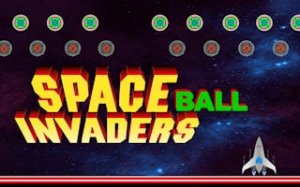
The visual style draws inspiration from classic arcade cabinets, using bright colors and simple shapes that are easy to follow during fast gameplay. The background remains dark, making the spheres and your ship stand out clearly. Sound effects provide immediate feedback for successful hits, misses, and power-up collection. The audio design avoids being distracting, instead reinforcing the rhythm of each wave. This combination creates an immersive environment that feels both nostalgic and clean.
Controls & Accessibility
Controls are designed for immediate understanding. Keyboard arrow keys or touch gestures move the ship left and right along a single axis. A single action button or tap fires projectiles upward. The response is instant, with no lag between input and on-screen movement. This simplicity makes the game accessible to younger players and those new to arcade-style games, while the increasing wave complexity keeps experienced players engaged. No complicated combos or menus are required.
Power-Up System
Occasionally, defeated spheres drop power-ups that grant temporary advantages. These include a rapid-fire mode that increases shot frequency and a shield that absorbs one hit. Power-ups appear randomly, adding an element of surprise and rewarding players who stay alert. Strategic players learn to position themselves near falling power-ups without losing focus on incoming spheres. The temporary nature of these boosts means they must be used wisely, especially during intense waves.
Scoring & Replayability
Each wave completed adds to your score, with bonuses for consecutive hits and quick wave completion. The game tracks your best performance, encouraging repeated attempts to beat your own record. Because sphere patterns vary each session, no two playthroughs feel identical. This variability, combined with the gradual difficulty increase, gives the game strong replay value. Players aiming for high scores will find themselves refining their strategies over many sessions.






03 Comments
Sign in to comment
You must be logged in before posting a review or rating.
No account? Create one
No comments yet. Be the first to comment!